Über Gerhard Ochsenfeld

*LH1965

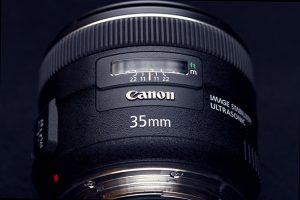
EF 35 mm 1:2 IS USM top APS-C-Normalobjektiv

Das EF 35 1:2 IS USM hat Canon als leichtes Weitwinkel für das Vollformat konzipiert. Für APS-C-Kameras hingegen gibt das EF 35 mm f/2 eine leicht verlängerte Normalbrennweite ab – und schneidet dabei hervorragend ab. – Als bescheiden oder beschämend für ein Normalobjektiv mag mancher die Anfangsblende von 1:2 empfinden. Jedoch… Hand aufs Herz: Wie viel Offenblende braucht man denn wirklich?

Canon EF 35 mm 1:2 IS USM – prima Normalobjektiv für APS-C-Sensoren!

35-mm7dwebsite

Ich möchte niemandem absprechen, eine Blende 1,4 gekonnt und kreativ einsetzen zu können. Aber ich bin mir sicher, dass die meisten eine solche Blende eher fast nie einsetzen. Und ohnehin lieber meiden, weil die Schärfentiefe oft nur ein einziges Detail klar wiedergibt. Genau an diesem Punkt frage ich mich dann, wie viel Geld man ausgeben sollte für etwas, das im Wesentlichen den Konjunktiv bedient. Nämlich, zu wissen, dass man könnte, wenn man nur wollte. Man will aber eben lieber nicht.

Hier komme ich also auf das Preis-Leistungs-Verhältnis zu sprechen. Und das bedient gerade das EF 35 mm 1:2 IS USM als Normalobjektiv für APS-C-Kameras in einer ganz herausragenden Weise!

Von Vignettierung keine Spur – auch nicht bei Offenblende. Man muss nicht viel von der Materie verstehen, um zu wissen, dass das keine schwere Übung sein sollte. Nutzt man eine Kamera mit APS-C-Sensor, dann nutzt man nur einen Ausschnitt aus dem angebotenen Bildkreis. Aber: Wer sich schon intensiver mit Objektiven befasst hat, weiß, dass das bei der vollen Blendenöffnung dennoch nicht selbstverständlich ist.

Mit unterschiedlichen Schwächen in Schärfe oder Kontrast bei weit offenen Blenden – die ich in meinem Video mit Bildmaterial untermauere – kommt das EF 35 mm f/2 bereits ab Blenden 2,8 oder 3,2 mit sehr (!) guten Ergebnissen daher. Wirklich hervorstechend ist es bei Blenden ab 4,0 und bis hinauf zu 5,6, teilweise gar bis 7,1. Durchaus abweichend von althergebrachten Faustformeln kommen ab Blende 8 schon wieder Schwächen auf – die allerdings noch nicht gleich praxisrelevant sind.

EF 35 mm 1:2 IS USM: hervorragendes Normalobjektiv mit sehr geringen Schwächen
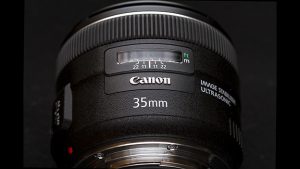
35mm-prodfot1website

Auffallend ist, dass man auch bei Blenden 2,0 oder 2,2 über die gesamte Bildfläche hinweg keineswegs schlechte Resultate geboten bekommt!

Dennoch sollte man für Reproduktionen und in der Größenordnung einer Aufnahmedistanz von etwa 1 bis 2,5 m nicht unbedingt bis in die Ecken hinein das Format ausnutzen – oder wenigstens eine Blende 6,3, besser Blende 8 nutzen. Dieses beherzigt, überzeugt das EF 35 mm 1:2 IS USM als Normalobjektiv am APS-C-Sensor sogar als Reprolinse im Kunst-Metier mit Schärfe und Detailtreue. Obgleich man hier instinktiv zu einem 50-mm-Objektiv greifen möchte, mag der Platz dafür auch mal nicht reichen – und dann enttäuscht dieses 35er auch in der recht kurzen Distanz nicht mit Beulen und Verzerrungen.

Eine Naheinstellgrenze von 24 cm bekommt man – da ja an sich als Weitwinkel für das Vollformat ausgelegt – eher geschenkt als mitgeliefert. Und für „geschenkt“ sage ich erst recht: Mit unerwartet guten Resultaten! Denn schon bei Blende 3,2 wird die Bildmitte herausragend scharf abgebildet. Wo es dann zum Rand hin nicht von praktischer Relevanz ist, da darf es auch sein, dass das Objektiv auf so kurze Distanz in der Schärfe schwächelt – und im tatsächlichen Bedarfsfall doch mindestens nach einer Blende 6,3 ruft.

So viele Worte an dieser Stelle. Mehr Details gibt es in meinem Video auf Youtube zu sehen. – Kurz zusammengefasst: Als Normalobjektiv für APS-C-Kameras ist das EF 35 mm f/2.0 IS USM von Canon eine wirkliche gute Wahl bei vorbildlichem Preis-Leistungs-Verhältnis.

Und was außerdem richtig gut geht… mit dieser hervorragenden Standard-Linse.

EF 35 mm 1:2 IS USM as APS-C standard lens

The Canon EF 35 mm 1:2 IS USM is not meant to be a standard lens, while offered as a medium-priced light wide-angle-lens for full-frame cameras. – Apart from this it is a remarkable standard lens for APS-C-cameras!

Great standard lens for APS-C: the Canon EF 35 mm 1:2 IS USM!

Maybe the f/2.0 is a blaming detail for a standard lens. 50 years or more have passed since we obviously accepted apertures like that on a standard focal length. So maybe you wonder why I call this lens a great choice, when looking for a standard lens for your APS-C.

35-mm7dwebsite

See my video on youtube to find different examples of use, to find test shots, to find 100-%-outcuts to show you great strengths and very low and less weaknesses of this lens. See and let me explain why I think this lens to be a great standard lens for Canon-EOS APS-C-cameras – furthermore at a medium pricerange.

Let me have a look back: Once starting with an FL-lens, in the 1970s Canon tried to establish the renewed FD 55 mm 1:1,2 lens as a standard lens for enthusiastic photographers and professionals. Canon was not the only enterprise to try to make the 55 mm for the former so called 35-mm-cameras (the nowadays full-frame) to be an accepted standard focal length. Already when Canon came along with it’s NEW F-1 – that was in the beginning 1980s – they stopped their engagement and accepted the demand for only 50 mm as a standard focal length.

But now I say: Here it is! The 55-mm-lens for anyone using APS-C!!!

Klick onto the photography to see my video review:
35mm7dstandard-lensweb

A 35-mm-lens is a 56-mm, mounted on Canon’s APS-C-cameras.

However, before watching my video let me give you my summery about the Canon EF 35 mm 1:2 IS USM – used with an APS-C-camera:

The lens is free from vignetting; chromatic aberations are really not relevant and can be found sometimes, when going down to the last pixel. Diffractions are unknown to this lens. Sharpness is good at any aperture; it is very good from f/2.8 up to f/9 – at last excellent between f/4.0 and f/7.1. Contrast is a bit weak at f/2.0, f/2.2, f/2.5 – and extraordinary from f/3.2 up to f/5.6.
Furthermore the lens is great in shorter distance: e.g. to reproduce paintings. Normally you would choose a 50-mm-lens at an APS-C-sensor. However, if you do not have the room to get enough distance for medium sized paintings, the 35-mm does not disappoint you! Choose an aperture of f/6.3 or best f/8 to be able to use it including the last of the corners. If the medium area is enough, you can start with f/2.5 to enjoy very good contrast and great sharpness.
Using this lens as one’s standard lens in conjunction with an APS-C-camera is neither honouring nor decoration. Unlike, in contrast to this your results are outstanding.

ef35mmprodfoto2

See my video to find out why the Canon EF 35 mm f/2 IS USM is a really great 55-mm standard lens on APS-C-cameras.

all-rounder EF-S 24 mm f/2.8 STM – review

I had made a german video about the Canon EF-S 24 mm f/2.8 STM all-round APS-C-lens, a more less than more spectacular lens for APS-C-cameras. Nevertheless it is a kind all-rounder. – Now here is the english video, not simply as a translation of the german video, but really an original video with some additional examples and pictures.

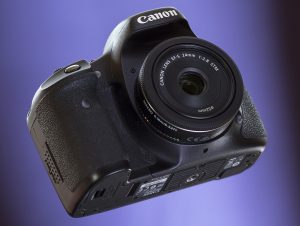
Canon takes us by surprise with this cheap EF-S 24 mm f/2.8 STM !

7d_with24mm4wordpress

The EF-S 24 mm f/2.8 STM is very unspectacular – but offers very surprising results. This lens does not try to be a specialist in any use. It is rather more an all-rounder. It is rather more the not conspicuous companion and the completely unburdening assistant. So this special lens only for APS-C-cameras has really deserved some attention! While this lens with complete justification fights for a silver or bronze medal I needed to offer you a review via youtube.

24mmstmmacrodtlv2web

For me it was the neccessarity to have a lens with a shorter focal distance than 35 mm. At the same time offering better results than the EF-S 15-85 mm f/3.5-5.6 IS USM. It was my inner refusal to pay the money for an EF 24 mm f/2.8 IS USM, that is as low-priced or as expensive as an EF 35 mm f/2.0 IS USM – but by far not as good as that! – The price of 150 Euro, spent for the 24-mm-pancake, was the low risk for a surprising good deal.

common all-rounder far better than bad average

Later image editing changes photographs, taken with a Canon EF-S 24 mm f/2.8 STM, to the better. Nevertheless, beyond the best the results are really remarkable! See my video and find out, if this lens might be a lens for you. But let me promise you: This all-round lens is more than a lens better than none! And is much more than a bad average. If you level the results up by more or less image editing, the EF-S 24 mm STM becomes a really good and modest companion to serve your ambitions.

24mmstm-prodfoto

Many examples, included in my video, will show you the advantages and disadvantages of this lens. See the weaknesses and strengths of the Canon EF-S 24 mm F/2.8 STM via 100-%-details. Be surprised and wonder about a real low-budget-lens – landing far beyond low-budget-results.

EF-S 24 mm f/2.8 STM – Erfahrungsbericht

Canon EF-S 24 mm f/2.8 STM – Erfahrungsbericht

Parallel zu diesem kurzen Erfahrungsbericht biete ich auch ein Video mit Beispielen und 100-%-Ausschnitten auf Youtube. Nicht mit drei oder fünf Minuten flott und bündig durchgeschüttelt, habe ich an meinen Video zum Samyang 10 mm f/2.8 sehen können, dass bei den Youtubern durchaus ein Bedarf an „echter“ Information und an belastbarem Bildmaterial besteht, um eine Kaufentscheidung mit gutem Gefühl treffen zu können. Deshalb gibt es nun auch zum Canon EF-S 24 mm f/2.8 STM ein umfangreiches Video – mit Bildbeispielen und 100-%-Ausschnitten.

EF-S 24 mm Pancake – ein sehr überraschendes Objektiv für APS-C-Sensoren

24mmPancakeDtl_website

Das Canon EF-S 24 mm f/2.8 STM ist „nur“ ein lumpiges Low-Budget-Objektiv, das Canon dann auch noch in Malaysia fertigt, um den Preis hinzubekommen. Denn egal, ob Kameras oder Objektive: Erzeugnisse, auf die Canon offensichtlich selbst große Stücke hält, werden in Japan gefertigt!

Trotz allem: Ein Blick auf das EF-S 24 mm Pancake lohnt sich! Nicht etwa, weil es als reines APS-C-Objektiv die Entsprechung zu dem 40-mm-Pancake für das Vollformat abgibt, sondern weil Canon sich in Sachen der Abbildungsleistung bei seinem EF 24 mm f/2.8 IS USM nicht gerade mit Ruhm bekleckert. Gleichzeitig kostet das anspruchsvolle und komfortable 24er so viel wie ein EF 35 mm f/2.0 IS USM – ohne eine vergleichbare optische Leistung zu bieten. Das wiederum ist vielleicht auch so gewollt: Nur nicht zu viel Engagement zeigen im mittleren Preissegment, um dem EF 24 mm f/1.4 Mark II USM – das Canon ja ebenfalls in seinem eigenen Stall stehen hat – nicht gänzlich den Rang abzulaufen. Aber dann ist es schwerlich gerechtfertigt, für ebenfalls eine Anfangsöffnung von 2,8 mehr als dreimal so viel Geld auszugeben.

Das EF-S 24 mm f/2.8 STM ist kein Held – aber es reicht!

Das „Pancake“ reicht im Zusammenhang mit einer nachgeschalteten Bildbearbeitung auch für höhere Ansprüche. Das hat mich sehr und positiv erstaunt. So ist es dann einfach böse, für das vermeintlich hochwertige EF 24 mm f/2.8 IS USM (im Jahre 2016) so runde 500 Euro aufzufrufen. Auch wenn es die bessere Autofokus-Technik bietet – und auch wenn es möglicherweise wenigstens ordentlich gegen Verzerrungen und Verzeichnungen korrigiert ist. Denn es ist nicht so scharf, wie ich das für einen solchen Preis erwarte. Über die bescheidene Anfangsöffnung möchte ich da nun gar nicht sprechen.

24mmstm-prodfoto

Wenn Canon noch unterhalb seiner L-Serie ein qualitativ hochwertiges Objektiv gegen den Konkurrenten von Sigma, das 24 mm f/1,4 DG HSM aus der Art-Serie, antreten ließe für einen Preis von ebenfalls circa 750 Euro, dann könnte ich das noch verstehen, wenn sie wenigstens mit einer Anfangsöffnung von 2,0 daherkämen – und ein Werkzeug böten, das auch wirklich scharfe Bilder macht. Wenn Canon das zur Not für einen Preis von 500 oder 600 Euro als reines EF-S-Objektiv ausgelegt hatte, dann könnte ich das auch noch verstehen, denn der kleinere Bildkreis entlastet ja auch um einige Probleme. So aber nun kann ich die Vermarktungsstrategie von Canon nicht leicht nachvollziehen: Dem EF 24 mm f/2.8 hätte bei der Aufstockung um den Image-Stabilizer einfach eine lohnenswerte optische Überarbeitung gut zu Gesicht gestanden. Nötigenfalls noch immer eine Anfangsblende von 2,8 wäre dann eben runtergegangen wie ein Wermutstropfen.

Selbst sehen, was einen erwartet: Ein Erfahrungsbericht mit Bildbeispielen und 100-%-Ausschnitten!

So wie nun aber die Situation ist, kann ich jedem nur empfehlen, der eine Crop-Kamera sein Eigen nennt, einen genaueren Blick auf das EF-S 24 mm f/2.8 STM zu werfen – das auch auf den Namen „24 mm Pancake“ hört. Und ich kann nur empfehlen, den eigenen Bedarf und auch die eigenen Möglichkeiten der Bildbearbeitung in die Erwägungen mit einfließen zu lassen. Um diese Abwägung ein wenig zu erleichtern, lade ich ein, sich meinen „Objektivtest“ im Video anzusehen.

Wer dann aber mit dem Canon EF-S 24 mm f/2.8 STM für sich nur das Unglück am Horizont winken sieht… den kann wiederum ich nur noch durchwinken zur Konkurrenz: Sigma holt (auch preislich durchaus anspruchsvoll) mit seiner Art-Serie jeden ab, dem das Däumlings-Objektiv zu schwach und zu leichtgewichtig ist und der sich mit den beiden vakanten EF-Objektiven von Canon nur noch alleingelassen fühlt zwischen einer qualitativen Frechheit oder einer preislichen Schwerlast.

Samyang 10 mm F2.8 – english review

My video review for Samyang 10 mm F2.8 now with an english spoken comment!

+ additional video with new comparisons concerning vignetting and sharpness.

Thumbnail-VideoEnglish

I did prepare an english version of my video review about the Samyang 10 mm F2.8. Furterhmore there is now an additional video of under 4 minutes. You should be able to evaluate by your own. The Samyang 10 mm F2.8 is an ultra wideangle lens, specially for APS-C-cameras. It is a class at it’s own.

The pictures I show, are mostly the same as in the german version of that video. However, you can really find a little bonus of picture and information. So you can learn a little more about this lens or about APS-C-sensors than I offer in the german version.

The Samyang 10 mm F2.8 is a lens only for APS-C-sensored cameras that does not offer common comfort, but extraordinary quality at an ultrawide angle.

See my video on Youtube!

It is really worthwhile to have a look on the Samyang 10 mm F2.8, if you are looking for an ultrawide angle lens for your APS-C-camera. The lens is fully manually – but the only prime lens with such a focal length. So if you are at odds with the zoom lenses you can find servering the ultra wide angle, because of bluring corners, strong distortion or extrem cromatic aberation… Here you are! This might be your next lens!

– My video includes many different pictures to show the abilities of the Samyang 10 mm F2.8, an ultra wide angle lens for APS-C only. –

I myself was uncertain, when I heard of that lens. Some videos and a website helped me… not to trust in the lens, but to dare to buy it. That, however, is the reason, why I want to show different pictures to make the ability visible for everyone who is interested in buying an ultra wide angle lens for his APS-C-camera – and everyone who is in doubt with the Samyang 10 mm F2.8: You don’t need to hear or to read hymns of praise! You need to see different results to weigh up by yourself, if this lens might be the right lens for you.

While I’m not able to embed pictures of adequate size into this template, I think it is the most easy way to present you a video review and a short additional video via Youtube to show you the ability of this unusual lens. The pictures included, are set on 1.920 x 1.080 pixel – you need to know for many 100-%-cutouts, I present.

For detailed technical information, specially about this lens and with a clear chart, go to the web site of Samyang.

I hope you enjoy 🙂